Best Commercial Real Estate Sites for Restaurant Tenants
3 min read22 views
Restaurant space is the most expensive kind of commercial space to get wrong. Kitchen infrastructure costs a lot to add, so the space you pick decides a big share of your opening budget.
That’s why the listing site you use matters. Here’s what a good one shows restaurant tenants, and what to check before you sign.
The Short Answer
The best commercial real estate site for restaurant tenants lets you:
- Search retail space in your area, where most restaurant spaces are listed
- See whether a space was a restaurant before
- Check kitchen specs in the listing, not just photos
- Compare rent and lease type
- Reach the landlord’s broker directly
First-Generation vs. Second-Generation Space
First-generation space has never been a restaurant. You’ll build the kitchen from scratch: hood, grease interceptor, plumbing, gas, and electrical.
Second-generation space was a restaurant before, so much of that is already in place. It can cut months and a large share of the build-out cost.
Two cautions with second-generation space. Have a contractor check the condition of what’s there. And find out why the last restaurant closed. Sometimes it’s the operator. Sometimes it’s the location.
The Kitchen Checklist
Before you get serious about any space, confirm:
- A Type I hood and fire suppression system, if you’ll cook with grease
- A grease interceptor sized to meet local code
- Gas service, and whether it’s sized for your equipment
- Electrical capacity, including three-phase power if you need it
- A clear path to vent the hood to the roof
- Room for a walk-in cooler and dry storage
- Restrooms that meet ADA requirements
A good listing will mention most of these. If it doesn’t, ask before you tour.
Zoning, Use, and Licensing
Make sure local zoning allows a restaurant at that address, and that the lease’s use clause allows your concept. If you plan to serve alcohol, check how liquor licenses work locally. Some cities and states limit how many are issued.
Parking rules matter too. Many cities tie required parking to seat count, which can cap how big your dining room can be.
Lease Terms Restaurant Tenants Should Negotiate
- Tenant improvement allowance: money from the landlord toward your build-out
- Free rent during build-out: so you aren’t paying rent before you can open
- Exclusive use clause: stops the landlord from leasing to a direct competitor in the same center
- Assignment rights: lets you transfer the lease if you sell the business
- Personal guarantee limits: caps how much you’re personally on the hook for
Some retail leases also include percentage rent or co-tenancy clauses. Here’s what those clauses actually protect.
What to Look For in a Listing Site
- Search by city and property type, with retail included
- Photos of the kitchen, not just the dining room
- Square footage and, where listed, seat count
- Rent, lease type, and estimated NNN charges
- A posted or updated date
If a site only shows exterior photos and "call for details," you’ll spend your time on phone calls instead of tours.
Where Hutfin Fits
Hutfin lists retail, office, industrial, and other commercial space for lease and for sale across the US. As of October 2026, it has nearly 1,800 retail listings. Start with spaces for lease in your city. If you’d rather buy an existing restaurant, check businesses for sale too.
Recap
- Second-generation restaurant space can save months and a big share of build-out cost
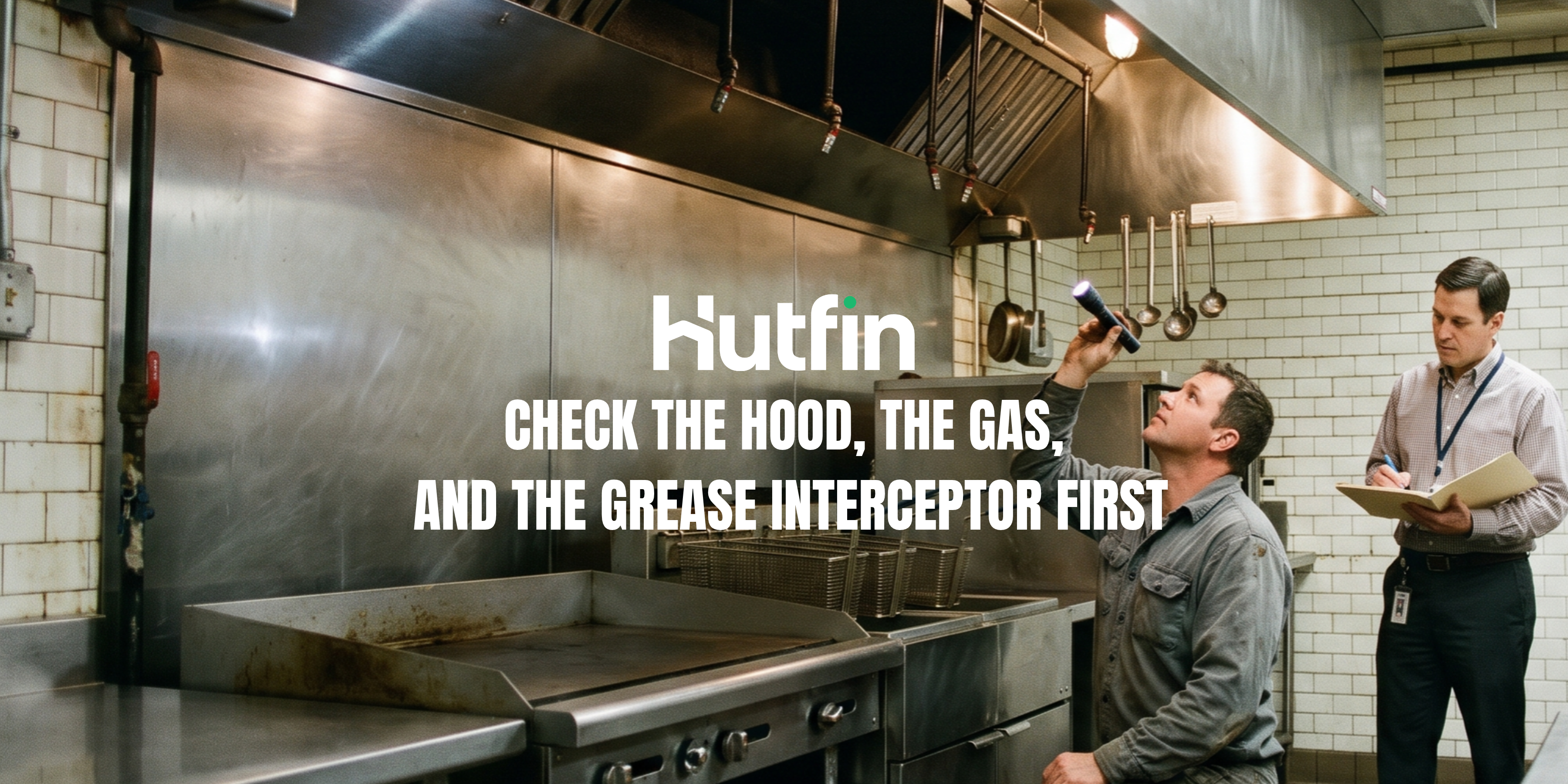
- Check the hood, grease interceptor, gas, electrical, and venting before you tour
- Confirm zoning, use clause, liquor licensing, and parking rules
- Negotiate tenant improvements, free rent during build-out, and an exclusive use clause
- Pick listing sites that show kitchen specs, rent, and lease type
Final Word
For a restaurant, the space is part of the business plan. Use a listing site that shows you enough to rule spaces out fast, and save your tours for the ones that could actually open.
Looking for restaurant space? Search retail space for lease at hutfin.com.